



The Primal Locomotion Revolution: Analyzing the Physics and Kinematics of Gorilla Tag
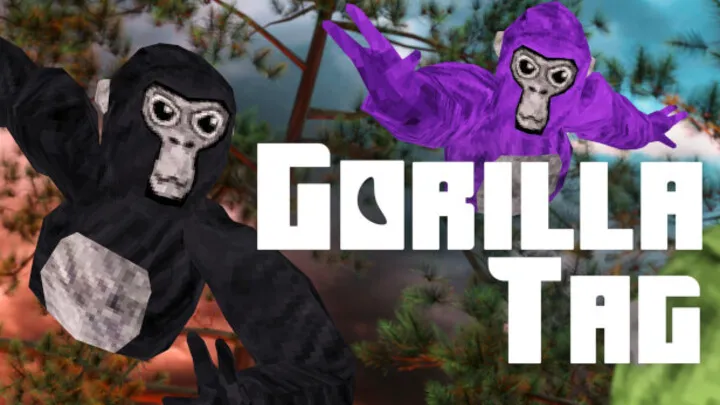
Gorilla Tag is not merely a social VR phenomenon; it is a groundbreaking experiment in digital biomechanics that has fundamentally redefined how human beings interact with three-dimensional virtual space. Eschewing the industry-standard teleportation or joystick-driven artificial locomotion, developer Another Axiom introduced a system predicated entirely on Newtonian physics and manual thrust. This article explores the deep technical architecture of Gorilla Tag’s movement system—the "monke" locomotion—analyzing the friction coefficients, the psychological impact of tactile propulsion, and the emergent athletic culture that has turned a simple game of tag into a high-stakes study of virtual kinematics. By removing the abstract layer of the controller thumbstick, Gorilla Tag creates a direct neurological link between physical effort and virtual displacement, effectively turning the user's upper body into a complex biological engine.
The significance of this system lies in its rejection of "comfort" in favor of "consequence." In most VR titles, the floor is a static plane; in Gorilla Tag, the floor is a trampoline, a slide, or a launchpad, depending entirely on the angle of incidence and the velocity of the player's arm swing. This deep dive will dissect the evolution of this locomotion from a technical curiosity to a competitive framework, examining how the absence of legs—a seemingly limiting design choice—actually unlocked a superior form of spatial navigation that mimics the brachiation and knuckle-walking of real-world primates while adhering to the unique constraints of VR hardware.
1. The Genesis of Limb-Based Propulsion: Breaking the Joystick Barrier
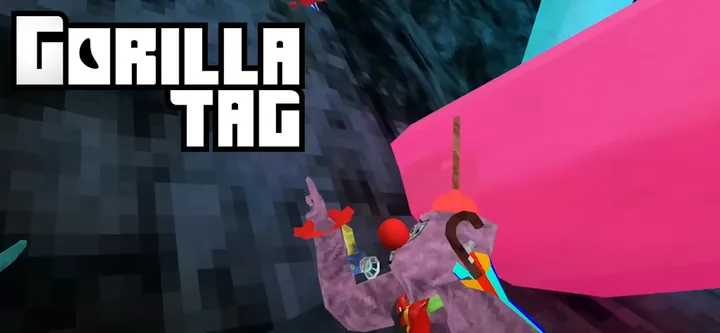
The early days of Gorilla Tag development were defined by a singular problem: VR motion sickness. Artificial locomotion (using a joystick) creates a sensory mismatch between the inner ear and the eyes. Gorilla Tag’s solution was to align visual movement with physical exertion. By mapping the player's hand collisions directly to the world's physics mesh, the game creates a "propulsion-based" movement. When you hit the ground, the game calculates the vector of your hand’s movement and applies an equal and opposite force to your avatar's body.
This created a sense of "tactile ground-feel" that was previously absent in the medium. Players weren't just moving an avatar; they were pushing the world away from them. This fundamental shift in the locomotor loop meant that every movement was a deliberate physical choice. The technical genius of this approach is that it sidesteps the need for complex leg animations and IK (Inverse Kinematics), focusing entirely on the relationship between the hands and the environment.
2. Newtonian Mechanics in a Digital Forest: Understanding Gravity and Friction
The physics engine of Gorilla Tag is deceptively simple, operating on a refined version of Unity’s PhysX. However, the tuning of the gravity constant and the friction of the surfaces is what gives the game its distinct feel. Unlike the real world, where friction varies wildly between materials, Gorilla Tag utilizes a relatively high friction coefficient for most surfaces, allowing players to "stick" to walls briefly if they maintain a certain upward velocity. This is the foundation of "wall climbing" and "wall running."
The Physics of the Bounce
- Angle of Attack: The flatter the hand hits the surface, the more force is converted into vertical lift.
- Vector Summation: If a player is already moving forward and hits a slanted surface, the game sums the current velocity with the new impulse, allowing for "momentum scaling."
- Friction Decay: During a wall run, friction is momentarily ignored to allow the player to slide along the vertical axis, provided they keep hitting the wall at intervals.
This balance between gravity and friction turns the environment into a series of geometric puzzles. A branch isn't just a platform; it’s a friction-reset point. By understanding the specific millisecond-window in which the game registers a collision, top-tier players can manipulate their trajectory with the precision of an Olympic gymnast.
3. The Brachiation Shift: Verticality and the Canopy Architecture
As the game evolved from the initial "Forest" map, the architectural philosophy changed to emphasize verticality. Brachiation—the act of swinging from one point to another using only arms—became the dominant mode of high-level play. The trees in Gorilla Tag are not just aesthetic; they are designed as a series of "locomotion nodes." The distance between branches is meticulously measured to ensure that a single, full-strength arm swing can reach the next level of the canopy.
This created a "Kinetic Flow State." In the canopy, the player is essentially flying, but through effort rather than magic. The game’s code treats branches as "solid-state" objects, meaning they don't bend or give. This rigidity allows for 100% force transfer. If a player swings their arm at 10 meters per second, the body moves at 10 meters per second. This absolute transparency in the physics model is why the game feels so responsive and why the "skill ceiling" is virtually infinite.
4. Pinch Climbing and the Mechanics of Compression
Pinch climbing is perhaps the most unique emergent mechanic in Gorilla Tag. It involves hugging a vertical object—like a pillar or a thin tree—and using a "pull-and-catch" motion. Technically, this relies on the game's ability to track two simultaneous collision points. By pulling down with both hands while "squeezing" the object, the player creates a momentary upward burst.
The complexity of this move lies in the timing of the release. If you release too late, gravity catches you; if you release too early, you lose your vertical momentum. This is a purely manual form of climbing that mimics the way a human might climb a rope, but without the benefit of legs to lock the position. It requires a high degree of shoulder-motor coordination, effectively turning the VR controllers into a set of mechanical pulleys.
5. Wall Running: The Transition from 2D to 3D Navigation
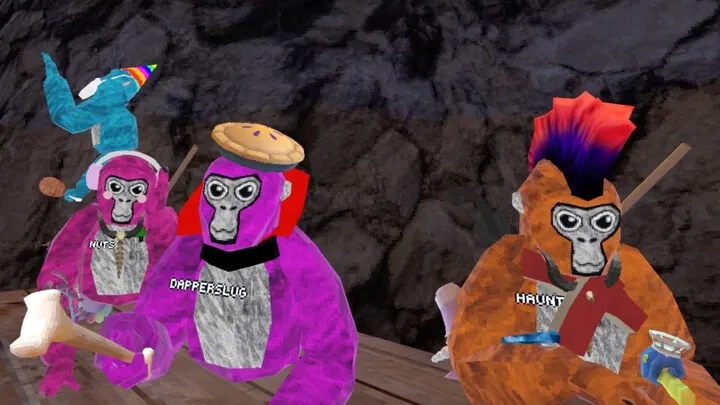
Wall running in Gorilla Tag is a masterclass in the exploitation of "Vector Normalization." When a player hits a wall at a shallow angle, the physics engine tries to push them away. However, by flicking the wrist parallel to the wall, the player can "override" the push-away force with a forward force. This keeps the player’s collision box within the "stickiness zone" of the wall's friction.
Technical Stages of a Wall Run
- Approach: Gathering enough horizontal velocity to minimize the time gravity has to pull the avatar down.
- Contact: The hand must hit the wall in a "sweeping" motion, not a "punching" motion.
- Frequency: The player must maintain a high "beats per minute" with their arm swings to counteract the constant 9.8m/s² gravity pull.
This mechanic transformed the game from a ground-based chase to an aerial dogfight. The walls became highways. The technical difficulty of maintaining this "flick" motion while turning 90-degree corners is what separates the casual player from the "Luci" runners who can stay on the walls indefinitely.
6. The "Lucio" Run and Slip-Slap Kinematics
Named after the community member who popularized it, the Lucio run is a high-frequency, double-handed wall-running technique that appears to defy gravity. From a data perspective, the Lucio run is about maximizing "Impulse Frequency." By using two hands in a rapid, cycling motion, the player is effectively cutting the gravity-fall window in half.
This requires the player to desync their arms, hitting the wall at alternating intervals. It is the most physically demanding move in the game, often requiring the player to move their real-world arms in a blurring circle. This is where Gorilla Tag moves from "gaming" to "virtual athletics." The heart rate of a player performing a Lucio run can spike to levels seen in competitive sprinting, proving that the game’s movement system is a literal bridge between digital and physical performance.
7. Slide Juking: Utilizing Environmental Collision Shapes
The "Slide Juke" is a brilliant example of how players use the geometry of the game’s hitboxes to their advantage. A slide in Gorilla Tag has a "hollow" hitbox in the center. By sticking your arm through the slide and then whipping your body around the exterior, you can execute a 180-degree turn without losing any momentum.
Technically, this is possible because the player’s "body" hitbox is centered on their head, while their "hands" are the only points of interaction. By "anchoring" a hand on the far side of an object and using the centrifugal force of a swing, the player can slingshot their head (the body) around an obstacle. This manipulation of the avatar's pivot point is a core component of high-level evasion tactics.
8. The Impact of Long Arms and Tracking Volume
A controversial but fascinating aspect of the Gorilla Tag movement is the "Tracking Volume" and arm length. Because the game calculates movement based on the distance between the head and the hand during a swing, players with longer physical arms have a natural "velocity advantage." This led to the emergence of "Long Arms" (using sticks or straps to extend controllers), which the community largely views as an exploit.
Tracking Limits and Glitch-Walking
- Refresh Rate: Higher headset refresh rates (120Hz) allow for more frequent collision checks, making movement feel smoother and more "connected."
- Tracking Loss: If a hand leaves the cameras' field of view during a massive swing, the game "guesses" the position, sometimes resulting in a "super-fling" that players can use to launch themselves at unintended speeds.
- Controller Haptics: The slight vibration when a hand touches wood provides the essential feedback loop that allows players to "feel" the distance without looking at their hands.
This intersection of hardware limitations and software physics creates a meta-game where players must calibrate their real-world play space to maximize their virtual reach. The "Gorilla Tag stance"—legs wide, arms ready—has become a recognizable physical posture in the VR community.
9. Surface Variation: From Forest Wood to Ice Physics
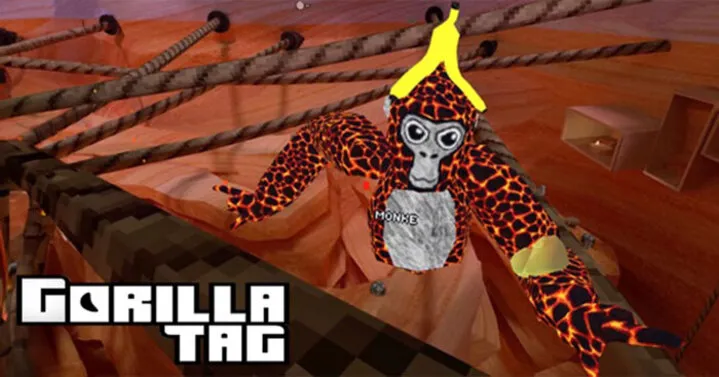
With the introduction of the "Mountain" and "Canyons" maps, Gorilla Tag introduced varying surface physics. The ice in the Mountains map has a near-zero friction coefficient. On wood, your hand stops when it hits; on ice, your hand slides. This shifted the movement logic from "Propulsion" to "Conservation of Momentum."
On ice, you cannot "push" yourself up; you can only "guide" your current slide. This requires a much more delicate touch, using the wrists to make micro-adjustments to the vector of travel. This addition showed the versatility of the limb-based locomotion system, proving it could handle not just high-friction climbing, but also low-friction skating, all without changing the base code of the arm-swing mechanics.
10. The Neural Pathway of the "Monke" Mindset
Perhaps the most profound deep-topic in Gorilla Tag is the "Proprioceptive Integration." Over time, the player's brain begins to treat the virtual gorilla arms as its own. This is known as the "Proteus Effect." Because the movement is so tied to physical exertion, the brain stops seeing the screen and starts seeing a physical environment.
When a player misses a branch and "falls," they often experience a genuine physiological stomach drop. This level of immersion is only possible because the locomotion is so "honest." There are no buttons to press to jump; you just jump. This creates a neural shortcut where the player's intention and the virtual action are perfectly synced. Gorilla Tag isn't just a game about being a gorilla; it's a game that convinces your nervous system that you have no legs and six-foot-long arms.
Conclusion
The technical legacy of Gorilla Tag lies in its unapologetic commitment to physical realism within a fantastical premise. By centering the entire experience on limb-based Newtonian propulsion, it solved the VR locomotion problem by leaning into the discomfort of physical exertion. The movement system is a complex symphony of friction, momentum, and tracking volume that has birthed a new genre of "active VR." From the basic "ground-slap" to the gravity-defying Lucio run, the game’s mechanics prove that when digital physics are consistent and transparent, the human brain is capable of mastering even the most alien forms of navigation. Gorilla Tag is more than a game; it is a primal return to movement, stripped of the abstractions of modern gaming and rebuilt on the raw, sweaty reality of human effort.