.webp) gamereviewforum.com
gamereviewforum.comOoblets Tips & Guide: Essential Strategies for Farming, Collecting Ooblets, Winning Dance Battles, and Growing Your Town
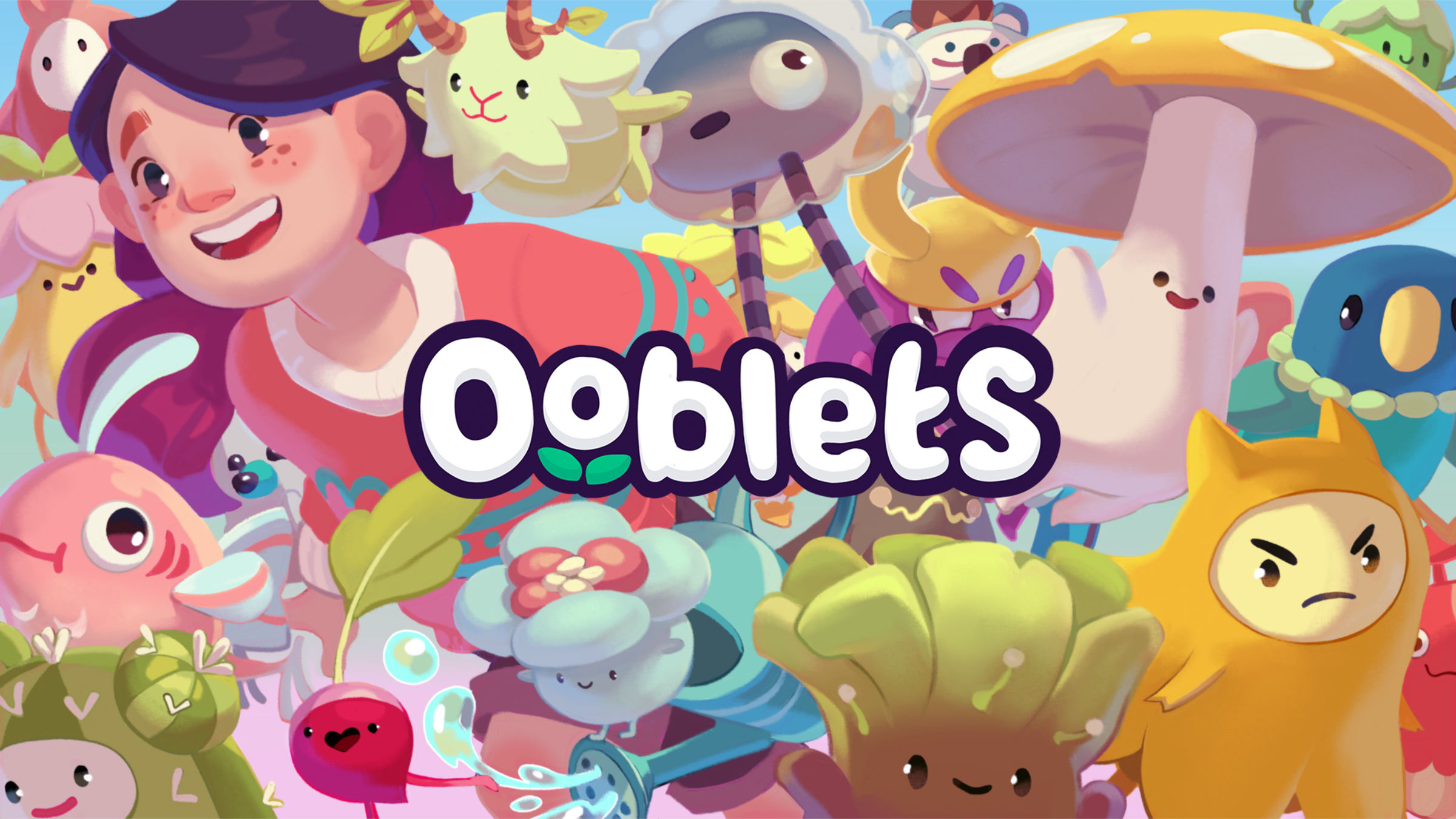
Ooblets is a colorful life simulation game that combines farming, creature collecting, town exploration, crafting, and rhythm-inspired dance battles. Instead of relying on traditional combat, players collect adorable creatures called Ooblets and challenge other characters to dance-offs using cards, moves, and strategic combinations. At the same time, you can grow crops, improve your home, complete quests, build relationships, and help the town of Badgetown flourish.
Although Ooblets has a relaxed atmosphere, managing your time, resources, and growing collection can become surprisingly strategic. Some activities require specific crops or crafted items, while others depend on your Ooblet team's abilities and the cards available during a dance battle. Learning how these systems connect will help you progress more efficiently without spending every day gathering resources or waiting for crops to grow.
This guide covers ten essential areas of Ooblets, from getting started and building a productive farm to collecting rare Ooblets, mastering dance battles, earning currency, and unlocking more of the world. Whether you are starting a fresh save or returning after a break, these tips will help you enjoy more of the game while avoiding common early mistakes.
1. Understand the Daily Gameplay Loop
Ooblets gives you considerable freedom in how you spend each day. You can explore Badgetown, talk to residents, complete tasks, gather materials, farm, craft items, and challenge characters to dance battles. However, trying to accomplish everything at once can leave you with little energy or time for the activities that matter most to your current goals.
A good daily routine starts with checking your available quests and identifying any important materials you need. If a quest requires a particular crop, crafted object, or item from a specific area, prioritize that requirement before wandering around collecting random resources. This approach prevents unnecessary trips and helps you make steady progress toward unlocking new features.
Build a simple morning routine
Begin by checking your farm and harvesting any crops that are ready. Replant empty spaces when you have suitable seeds, water your plants as needed, and organize your inventory before leaving home. These small actions establish a reliable foundation for the rest of the day.
Next, review your quest objectives and decide which activities fit together geographically. For example, you might gather materials while visiting a character who needs an item, then complete a dance battle before returning to town. Combining tasks saves time and makes exploration feel more productive.
A practical routine includes:
- Harvesting mature crops and replanting useful ones.
- Checking quests for important items and deadlines.
- Visiting shops when you need seeds, supplies, or recipes.
- Gathering resources along your planned route.
- Completing dance battles when you have a suitable team.
- Returning home to organize inventory and prepare for the next day.
You do not need to follow this routine perfectly. The important point is to give each day a clear purpose while leaving room for discoveries and spontaneous activities.
Avoid unnecessary grinding
It can be tempting to collect every resource you encounter, but carrying large quantities of low-priority items may make inventory management more difficult. Gather materials when they support a current objective, a useful recipe, or a planned farm expansion.
Ooblets is designed around gradual progression rather than constant pressure. A focused day that completes one important quest and prepares several future tasks can be more valuable than a long day spent collecting materials without a specific goal.
2. Build a Farm That Supports Your Progress
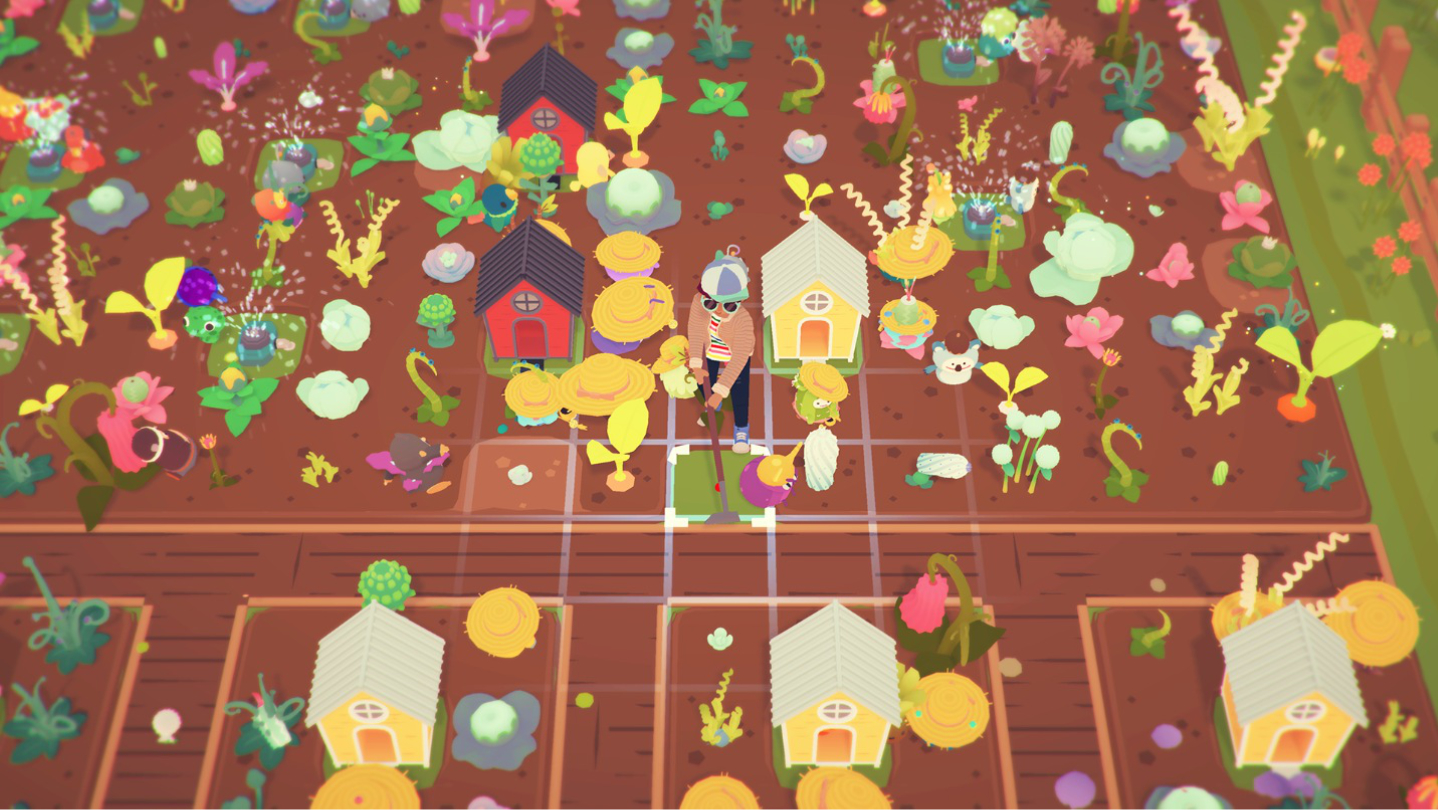
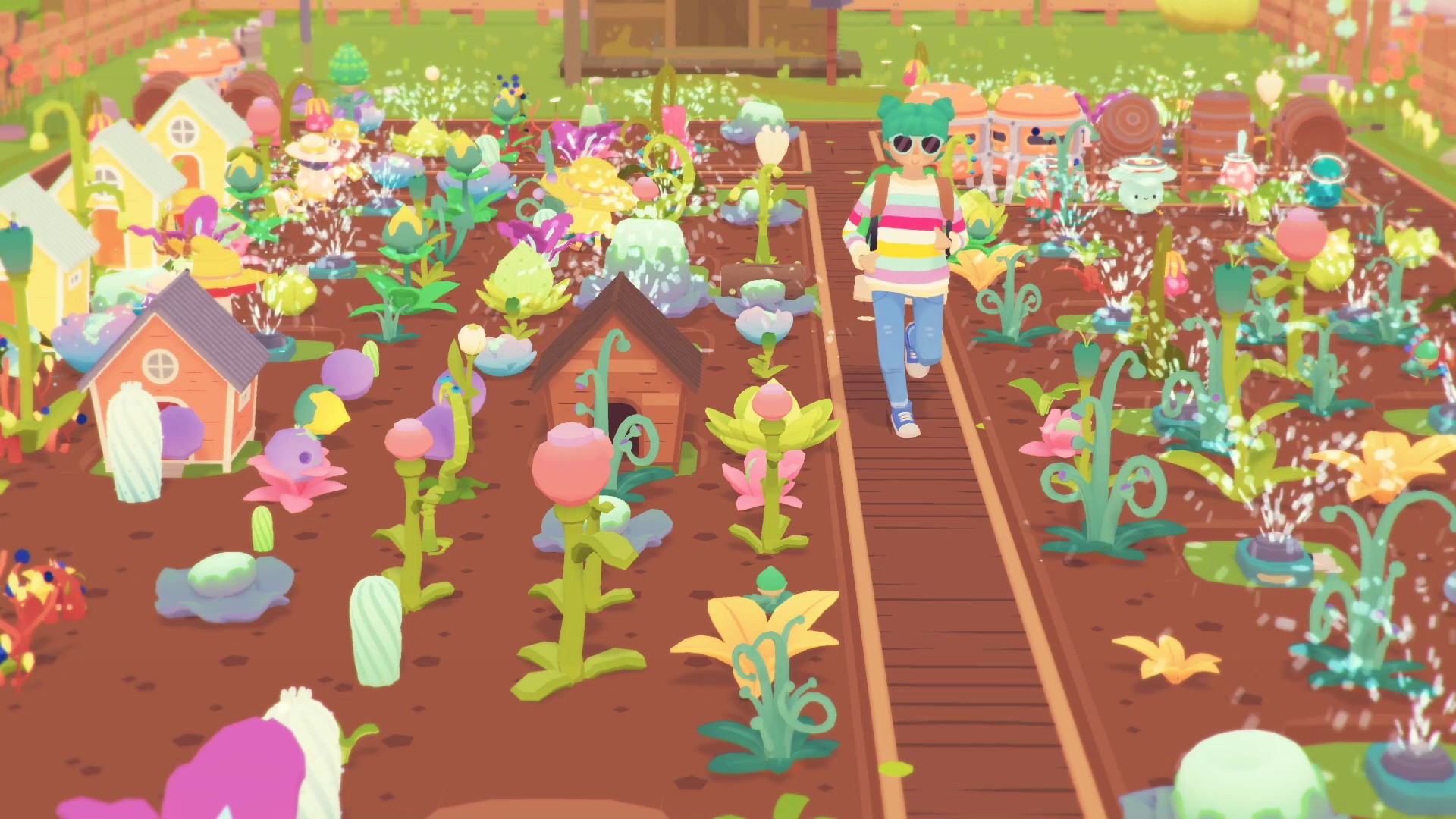
Farming is one of the most important systems in Ooblets because crops are used for cooking, crafting, quests, and other activities. Your farm is not simply a source of money; it also supplies materials that allow you to participate in the game's wider systems.
At the beginning, concentrate on crops that are affordable, easy to manage, and useful for upcoming objectives. Planting a large variety of seeds may seem appealing, but spreading your resources too thin can leave you short of the ingredients needed for important quests or recipes.
Prioritize useful crops
Before planting, consider how each crop will contribute to your current plans. Some crops are valuable because they sell for a reasonable price, while others are more important as ingredients or quest requirements. Keeping a mix of practical crops is usually more useful than focusing entirely on immediate profit.
When deciding what to plant, consider:
- Growth time: How soon will the crop become available?
- Seed cost: Can you afford to plant it without exhausting your funds?
- Utility: Does it appear in recipes, crafting requirements, or quests?
- Availability: Can you purchase more seeds reliably?
- Space: Does the crop justify the amount of farmland it occupies?
Keep a modest reserve of commonly needed ingredients rather than selling every harvest. This gives you flexibility when a new quest appears or you unlock a recipe that consumes materials you previously treated as surplus.
Expand gradually
Early farm expansion should focus on making existing land more productive. You do not need to fill every available tile immediately. Additional plots create more planting and harvesting work, so expanding faster than your resources allow can turn farming into a chore.
Start with an area you can maintain comfortably, then increase the size of your farm when you have enough seeds, money, and time. A well-managed small farm is often more useful than a large field filled with crops you cannot use efficiently.
As your farming system develops, think of each planting cycle as preparation for future activities. By maintaining a steady supply of ingredients, you can complete more quests, experiment with crafting, and spend less time returning to shops for basic supplies.
3. Collect Ooblets Strategically
Ooblets are the central attraction of the game, and collecting different species is one of the most rewarding parts of progression. Each Ooblet has its own appearance and dance-battle characteristics, while different species and rarer variants provide additional collection goals.
New Ooblets are generally obtained by finding them in the world and meeting the requirements for their dance challenges. These requirements can involve particular items, so it is useful to prepare before approaching a creature you want to recruit.
Prepare the required items
When you encounter an unfamiliar Ooblet, pay attention to what it requires for a dance battle. If you lack the necessary item, note the requirement and return later rather than wasting time searching randomly for a solution.
This is where farming and exploration connect directly to creature collecting. Crops can become ingredients for prepared items, while gathered materials can support crafting. Keeping a varied inventory gives you more opportunities to meet recruitment requirements when you discover a new species.
Before exploring an unfamiliar area, consider carrying useful supplies and checking whether you have the resources needed to prepare common items. You will not be able to anticipate every requirement, but basic preparation reduces unnecessary backtracking.
Build a balanced collection
It is easy to focus exclusively on rare Ooblets, especially when a particular appearance catches your attention. However, collecting a range of species also helps you experiment with different dance-battle strategies and learn how various moves affect the flow of a match.
Try to maintain a mixture of Ooblets rather than relying on one favorite creature for every challenge. As your collection grows, you can choose a team that suits the battle you are about to enter.
Also, remember that collection progress does not have to happen all at once. Some creatures may require items you cannot easily obtain early in the game. Recording these goals mentally or through your quest notes allows you to revisit them when your farm and crafting options improve.
4. Master Dance Battles and Card Strategy
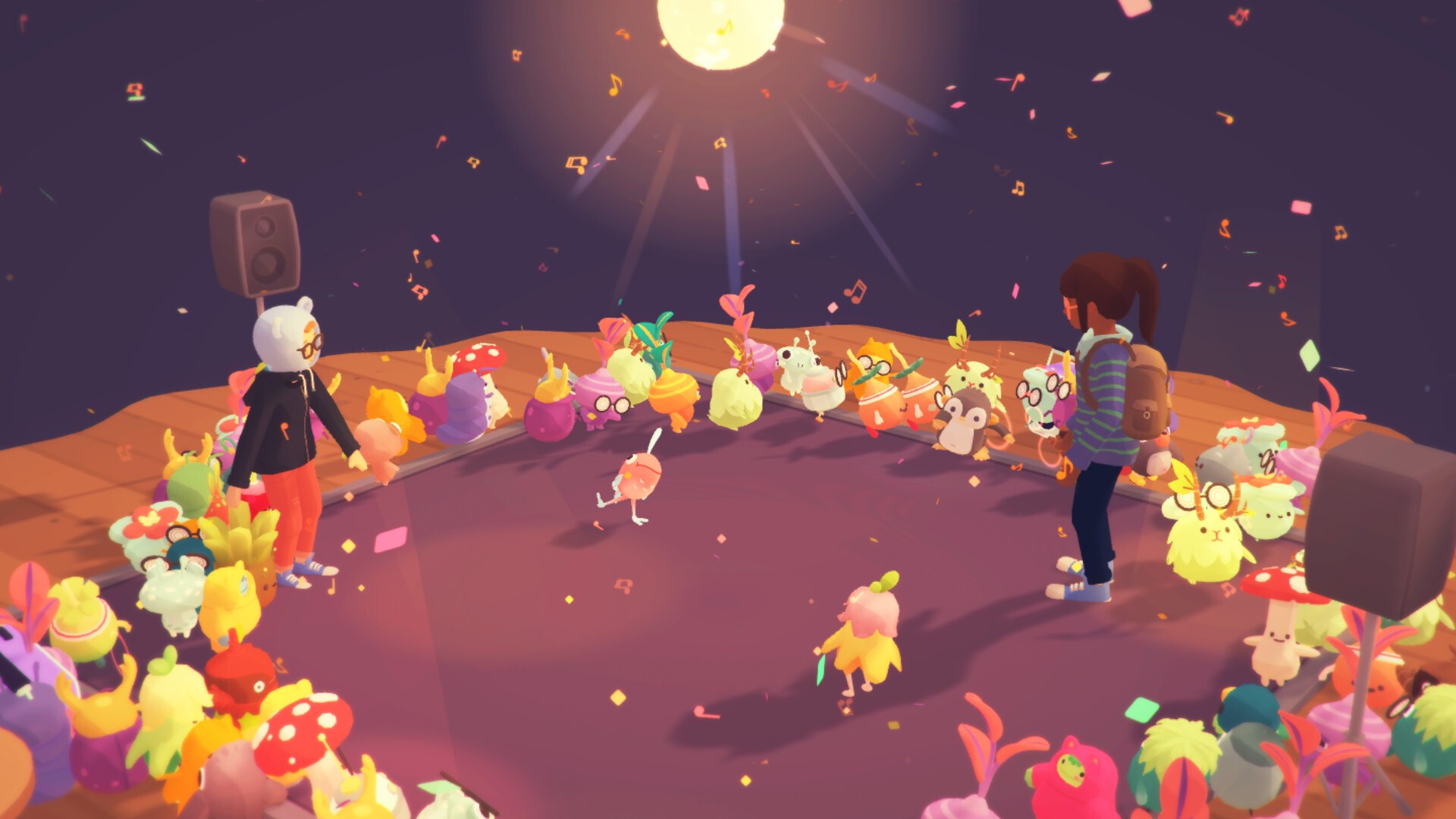
Dance battles replace conventional creature combat with a turn-based card system. You and your opponent use dance moves to generate points, influence the match, and pursue the victory conditions. The result depends on the cards available, the team you bring, and how efficiently you use your turns.
A common beginner mistake is to choose moves based only on the points they provide. Points are important, but cards can also affect the cost of later actions, the cards available to you, or the opponent's ability to respond. Understanding these effects makes your decisions more deliberate.
Read every card before playing it
Before committing to a move, check its point value and any additional effects. Some cards are designed to generate points directly, while others support a longer strategy by improving future turns or interfering with your opponent.
A useful decision process is:
- Check the current score and the points required to win.
- Review the cards available in your hand.
- Identify any useful effects that can improve later turns.
- Compare the cost of each move with your remaining resources.
- Choose a combination that advances your plan without wasting actions.
You do not need a complicated strategy for every match. If a straightforward move puts you close to victory, it may be better to secure the lead than to build an elaborate combination that gives your opponent more opportunities.
Manage resources carefully
Many dance moves have costs or restrictions, so playing the strongest card immediately is not always the best option. A sequence of affordable cards may produce a better result than spending everything on one impressive move.
Pay attention to how your cards interact. A move that creates an advantage now may be particularly valuable if it allows you to use a stronger card on the next turn. Conversely, saving resources for too long can allow an opponent to gain control of the match.
As you gain experience, you will begin to recognize when to play aggressively and when to prioritize efficient point generation. The best strategy depends on your available cards and the specific opponent, so experimentation is more valuable than memorizing a single universal sequence.
5. Choose Ooblets That Complement Each Other
Your dance-battle team affects the moves you can access and the options available during a challenge. Although it can be tempting to select only your favorite-looking Ooblets, team selection becomes more effective when you consider how each member contributes to your overall strategy.
A useful team gives you access to a range of options. Some moves may be especially good at building points, while others can support combinations or disrupt an opponent. Having several creatures that offer similar strengths is not necessarily bad, but it can leave you less flexible when a battle demands a different approach.
Experiment with different combinations
Try different team compositions against opponents you can defeat comfortably. This gives you a low-pressure way to learn the cards and effects associated with your available Ooblets.
After a battle, consider which moves were most useful and which cards felt difficult to use. If your team regularly struggles to generate points quickly, try a different combination. If you consistently have useful cards but cannot afford to play them, focus on understanding their costs and the order in which you use them.
You should also consider the challenge itself. A team that works well against one opponent may not be ideal against another, especially when their cards or battle requirements encourage a different approach.
Keep collecting even after finding favorites
Your first successful team does not have to become your permanent lineup. New Ooblets expand your strategic options, and experimenting with them can reveal combinations you would otherwise overlook.
Treat your collection as a toolkit. The goal is not to make every creature equally important but to develop enough familiarity with your options that you can adapt to different situations.
6. Make Smart Use of Gummies and Other Resources
Gummies are an important currency in Ooblets, helping you purchase goods and support your progression. Early on, money can feel limited because you need to buy seeds, obtain supplies, and prepare for new activities at the same time.
The most effective way to manage your funds is to distinguish between purchases that solve an immediate problem and purchases that simply look appealing. Cosmetic items and optional upgrades can be enjoyable, but spending too much early may slow down your ability to buy ingredients or maintain your farm.
Spend according to your priorities
Before making a purchase, ask whether it will help you complete a quest, unlock an important feature, or produce a useful long-term benefit. If it does none of these things, consider waiting until your income becomes more reliable.
A sensible early spending order is to maintain the resources needed for farming and progression, purchase ingredients or materials when they serve a clear purpose, and reserve discretionary spending for periods when your basic needs are covered.
This does not mean you should avoid all optional purchases. Ooblets is also about personal expression and making your town and home feel like your own. The key is to avoid buying too many decorative or nonessential items before you have established a stable economy.
Turn surplus into useful income
As your farm becomes more productive, identify which harvested items you can safely sell without compromising future plans. Surplus produce can help fund new seeds and other purchases, but selling everything immediately may force you to spend money replacing ingredients later.
A small reserve of frequently used crops and materials can save money over time. Once you understand which items you need regularly, you can sell excess stock with greater confidence.
Avoid treating every item as a profit opportunity. Some resources may be difficult to replace or valuable for crafting and quests. A balanced economy comes from knowing what you can sell, what you should keep, and what you need to produce next.
7. Complete Quests and Build Relationships
Quests provide structure to Ooblets' open-ended gameplay. They introduce new mechanics, guide you toward useful activities, and often require you to collect items or interact with characters around Badgetown.
Instead of treating quests as separate chores, use them to organize your daily plans. If a quest requires an ingredient you can grow, plant it as early as possible. If you need a material from a particular location, collect it while exploring that area for other reasons.
Keep track of dependencies
Some objectives take longer than a single visit because they rely on crop growth, crafting, or access to a specific resource. Starting these tasks early helps prevent them from becoming bottlenecks later.
When you receive several quests at once, sort them mentally into three groups:
- Immediate tasks: Objectives you can complete with items already in your inventory.
- Preparation tasks: Objectives requiring crops, crafting, or purchased supplies.
- Exploration tasks: Objectives that involve visiting another area or finding something unfamiliar.
Work on preparation tasks early, then complete immediate and exploration tasks while waiting for resources to become available. This makes better use of your time than waiting until the last minute to begin every requirement.
Talk to the people of Badgetown
Interactions with residents help make the town feel alive and can support relationship progression. Take time to speak with characters as you move around town, especially when you have a reason to visit their locations for quests or shopping.
You do not need to spend every day talking to everyone. Instead, make conversations part of your regular route and pay attention to opportunities that align with your current objectives.
Relationships, quests, and exploration work best when treated as interconnected parts of progression. By staying engaged with the residents, you can discover new tasks and make your time in Badgetown more rewarding.
8. Explore New Areas Without Wasting Resources
As you progress, Ooblets opens up more places to explore, each offering different activities, resources, and potential collection opportunities. Exploring is essential, but going into a new area without enough supplies can make your trip less productive.
Before leaving town, review your current objectives and think about what you might need. Bring items that support your planned activities, leave room for new materials, and avoid filling your inventory with things that are unlikely to be useful.
Give each trip a clear objective
Rather than exploring aimlessly, decide what you want to accomplish during a visit. You might be looking for resources, pursuing an Ooblet collection goal, completing a quest, or discovering new points of interest.
Once your primary objective is complete, take advantage of nearby opportunities. If you find another useful resource along the way, gather it. If you discover an unfamiliar creature but lack the required item, make a note of the requirement and return later.
This approach keeps exploration flexible without sacrificing efficiency.
Learn from failed attempts
Not every trip or dance challenge will produce the result you wanted. You may arrive without the right item, find that your current team is poorly suited to a battle, or discover that a resource requires additional preparation.
These setbacks are useful when they teach you what to do differently next time. Identify the missing ingredient, adjust your team, or change the order of your tasks before repeating the activity.
Ooblets rewards curiosity, so do not become so focused on efficiency that you stop experimenting. The best balance is to prepare for important objectives while remaining open to unexpected discoveries.
9. Craft Useful Items and Prepare for Future Goals
Crafting connects farming, gathering, and progression by turning raw resources into items that support your activities. Recipes can help you prepare for dance challenges, fulfill quest requirements, and make better use of materials that would otherwise sit unused in your inventory.
Whenever you unlock a new recipe, check which ingredients it requires and whether those materials are easy to obtain. If the recipe depends on a crop, consider adding that crop to your planting rotation. If it requires gathered resources, collect them during future exploration trips.
Craft with a purpose
It is tempting to make every available item as soon as a recipe becomes accessible. However, crafting without a plan can consume ingredients you need for something more important.
Before crafting, consider the item's immediate purpose, the cost of replacing its ingredients, and whether you can produce it again when needed. If an item is required for a current quest or a planned Ooblet challenge, prioritize it. If it is merely an experiment, make sure you have enough spare materials.
A simple resource-planning habit is to maintain a short mental list of your current bottlenecks. These might include a particular crop, a rare ingredient, or a material used in several recipes. Once you know what is limiting your progress, you can direct your farming and exploration toward solving that problem.
Prepare before unlocking the next milestone
Progression often introduces new tasks and opportunities. Preparing useful ingredients and keeping a reserve of basic resources makes it easier to respond when something new becomes available.
You do not need to predict every future requirement. Instead, maintain a varied supply of common materials and avoid selling or consuming rare ingredients without considering their potential uses.
Over time, you will learn which resources deserve extra attention. This knowledge makes crafting feel less like a series of interruptions and more like a natural extension of your farm and exploration routine.
10. Optimize Long-Term Progress and Avoid Common Mistakes
Once you understand farming, collecting, dance battles, and crafting, the main challenge becomes combining these systems efficiently. Strong long-term progress comes from maintaining a reliable routine while directing your attention toward whichever part of the game currently limits you.
For example, if you cannot recruit a particular Ooblet because you lack an item, your priority should be obtaining its ingredients rather than repeatedly challenging unrelated opponents. If money is running low, focus on productive farming and sensible sales. If battles are becoming difficult, spend time learning your available cards and adjusting your team.
Common mistakes to avoid
Several habits can make Ooblets feel more demanding than it needs to be:
- Planting without a plan: Random crops can leave you short of essential ingredients.
- Selling everything: Immediate profit may create extra expenses when you need materials later.
- Ignoring dance-card effects: Choosing moves solely for their point value can waste useful opportunities.
- Using the same team for every challenge: A different combination may provide better options against certain opponents.
- Exploring without preparation: Missing ingredients can force unnecessary return trips.
- Crafting impulsively: Spending rare resources on low-priority items can delay important objectives.
- Expanding the farm too quickly: More land creates additional work before your resource supply is ready.
Avoiding these habits does not require perfect planning. A few simple checks before planting, shopping, crafting, or exploring can prevent many unnecessary delays.
Set goals that match your playstyle
Ooblets supports several kinds of progression, and you do not have to prioritize all of them equally. If you love collecting creatures, focus on obtaining new species and preparing for their dance challenges. If farming is your favorite activity, develop a productive planting routine and gradually improve your operation. If you enjoy town life, spend more time with residents, completing quests, and customizing your surroundings.
You can also rotate your priorities as you play. Dedicate one day to farming and crafting, another to exploration and collecting, and another to completing quests or improving your battle strategy.
The most efficient approach is not necessarily the one that produces the most items per day. It is the one that helps you make consistent progress while preserving the relaxed, playful experience that makes Ooblets enjoyable.
Conclusion
Ooblets combines farming, creature collecting, crafting, exploration, and dance battles into a charming progression system where each activity supports the others. By planning your daily routine, planting useful crops, preserving important ingredients, and building a flexible collection of Ooblets, you can make steady progress without unnecessary grinding.
The most important lesson is to connect your actions to your goals. Grow crops that support your quests, gather materials while exploring, learn the effects of your dance cards, and spend resources with a clear purpose. As your knowledge and collection grow, the game's systems become easier to manage and more rewarding to explore.
Most importantly, leave room for experimentation. Try new teams, discover unfamiliar areas, decorate your surroundings, and collect the Ooblets that make you smile. With a little preparation and a willingness to explore, Badgetown offers plenty of reasons to return for another day.
Description (160 characters): Master Ooblets with tips for farming, collecting creatures, winning dance battles, crafting useful items, managing Gummies, and exploring Badgetown.